

How to Make Custom Mugs to Sell: 3 Methods & a 7-Step Guide


There are 3 ways to make custom mugs to sell: DIY at home with a sublimation printer or mug heat press, print-on-demand (a provider prints and ships each order, no equipment needed), or bulk production from a manufacturer. Print-on-demand is the lowest-risk way to start because you pay nothing until a customer orders. This guide compares all 3 methods, then walks you through 7 steps to design, price, and sell custom mugs profitably on Etsy, Amazon, Shopify, or any platform you choose.
3 Ways to Make Custom Mugs to Sell: DIY, Print-on-Demand, or Bulk Production
Before designing anything, decide how your mugs will be produced. This choice sets your upfront cost, profit per mug, and the equipment needed to start a custom mug business. The table below compares the 3 popular methods:
| DIY at home | Print-on-demand (POD) | Bulk production | |
|---|---|---|---|
| How it works | You print designs onto blank mugs and ship orders yourself | A POD provider prints and ships each mug after a customer orders | A manufacturer produces your designs in volume; you store and ship |
| Equipment needed | Sublimation printer, mug press, sublimation paper and ink, heat-resistant tape, sublimation-coated blank mugs | None. Just your design files | None. The manufacturer handles production |
| Upfront cost | $350–$500 for printer, ink, and mug press; under $1,000 including supplies | ~$0 | High. Minimum order quantities apply |
| Cost per mug | ~$2–$3.50 in materials | ~$4.69+ base cost plus shipping | Lowest per unit at volume |
| Control over quality | High | Medium | Very high |
| Profit per mug | High. Most sellers price sublimation mugs at $12–$25 | Lower. The provider keeps the base cost | High, but capital is tied up in inventory |
| Best for | Small batches, craft fairs, local orders | Beginners, testing designs, online stores | Corporate orders, wholesale, proven repeat sellers |
For most new sellers, the smart path is to start with print-on-demand to test which designs sell, then move winning designs to DIY or bulk production for better margins. A DIY setup pays for itself after roughly 30–40 mugs sold (Sublimation Guides), but only if you already know those designs sell.
How to Make Custom Mugs to Sell: 7 Core Steps
The workflow is simple. These 7 steps break it down:
- Choose a profitable mug type to customize
- Select the right printing method for custom mugs
- Find a reliable custom mug provider
- Create high-converting custom mug designs
- Set up mug customization options
- Calculate costs and pricing for personalized mugs
- Market and sell your custom mugs
Step 1: Pick a Niche and a Profitable Mug Type
A niche decides whether your mugs get found at all. Instead of selling generic mugs, target a specific buyer: occupation mugs work better as micro-niches ("pediatric ER nurse" beats "nurse" because it ranks with less competition). And personalized name mugs command a 35–60% price premium over non-personalized designs (Insight Agent). Pick one audience like pet owners, a profession, couples, or a hobby before choosing what to print on.
Custom mugs and cups come in many variations based on material, shape, and size:
- Mug materials: Ceramic, stoneware, stainless steel, glass, or plastic.
- Mug shapes: Round belly, small belly, straight, footed, tankard, or flare.
- Mug sizes: 11oz, 15oz, 20oz to 30oz.
Two types are the most profitable to customize:
- Custom ceramic coffee mugs: Ideal for daily use, gifts, and personalization with names, photos, or quotes. Affordable, durable, widely supported by POD providers, with excellent print quality. Best-selling sizes: 11oz and 15oz.
- Custom stainless steel mugs and tumblers: Best for commuters and outdoor lovers. They retain temperature, feel premium, and sell at higher prices. Top sellers: 20oz, 30oz, and travel mugs.
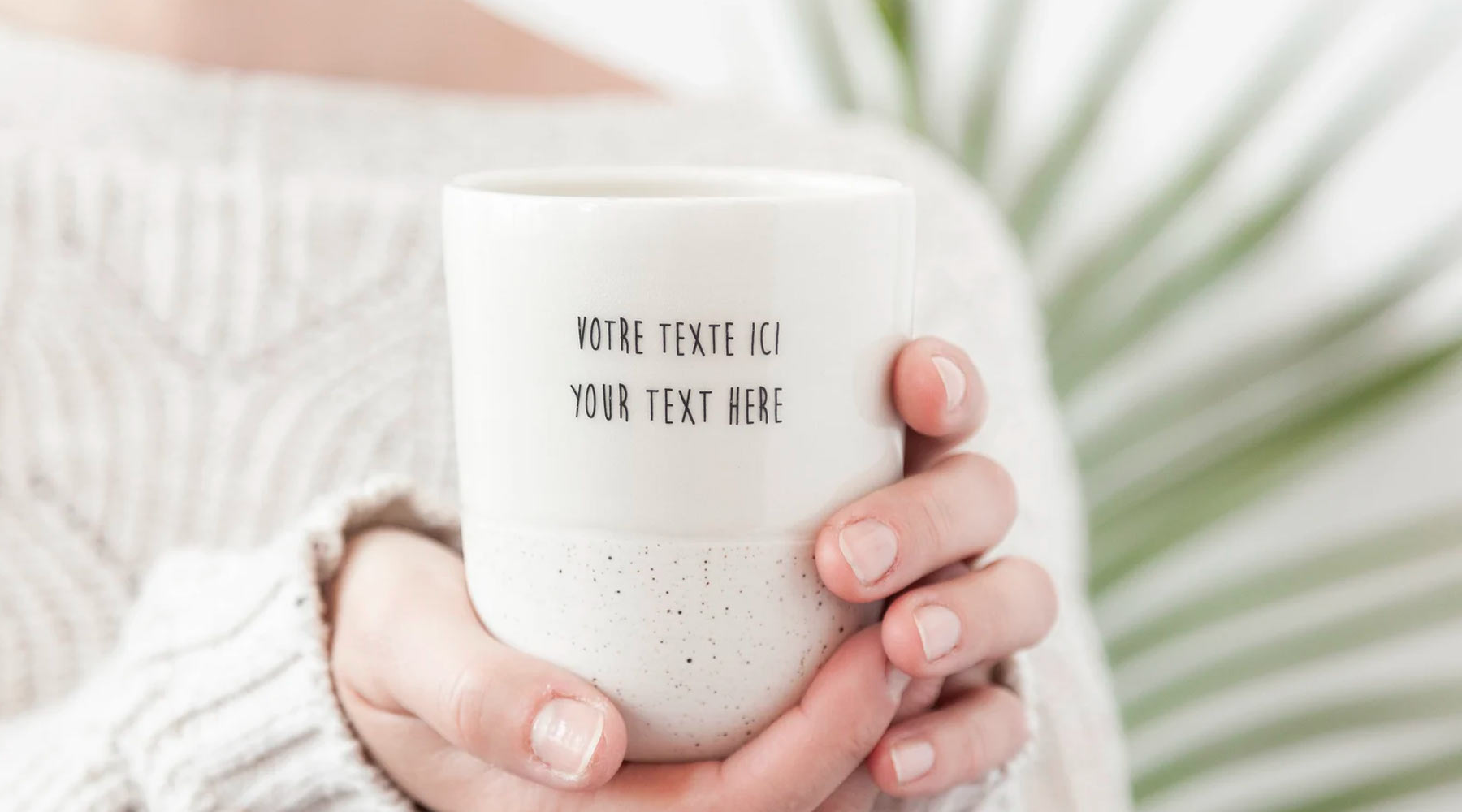 Making custom coffee mugs to sell is promising
Step 2: Select the Right Printing Method for Custom Mugs
The printing method you choose affects mug quality, durability, production speed, and how fast you can scale:
- Sublimation printing: Best for ceramic mugs with straight or slightly curved shapes - the most popular method in print-on-demand. Vibrant, full-wrap, dishwasher-safe results.
- UV printing: Fits stainless steel, glass, and plastic mugs; growing fast for premium drinkware. Supports full-color designs on many materials.
- Heat press (vinyl or transfer paper): Works for ceramic mugs and simple designs; popular with DIY sellers for small batches. Low startup cost, but limited durability and poor scalability.
- DTG printing: Handles detailed artwork on flat or lightly curved ceramic mugs. Low adoption for mugs due to lower durability than sublimation.
Insights: Print-on-demand sellers usually choose sublimation or UV printing to balance quality, efficiency, and scalability.
💡 You may also like: Winning Mindset to Successfully Dropship Personalized Products
Step 3: Find a Reliable Custom Mug Provider
While making custom cups to sell, you should look for providers that offer high-quality mugs, compatible printing methods, fast production and shipping (fulfillment), and responsive support to avoid delays and unhappy customers.
Save the top-notch custom mug providers to sell with:
- merchOne (best for the EU market): Formerly Picanova, ideal for high-volume sellers. It provides fast shipping and a 48-hour fulfillment promise. They are famous for allowing you to keep selling later into the Christmas season than almost any other provider.
- Dreamship (best for the US market): Highly recommended for scale and speed. They offer the "white edge-to-edge mug," which allows for a full print on the mug, along with skinny tumblers, whiskey glasses, and more.
- Printify (best price): Known for the largest network of print locations. It allows you to choose specific printing hubs (like Printed Mint or District Photo) to optimize for the fastest shipping or lowest base cost (starting around $4.69 for a standard ceramic mug).
- Printful (best quality control): While slightly more expensive, Printful owns its fulfillment centers, ensuring more consistent print quality and premium packaging options. They are the top choice for Stainless Steel tumblers and laser-engraved drinkware.

Step 4: Design High-converting Custom Mugs
The goal: a finished mug design that looks great in real life and sells well online.
- Get design inspiration: Research best-selling custom mug designs on Etsy and Amazon, analyze competitor stores, or collaborate with independent artists.
- Prepare design resources: Download fonts, graphics, and illustrations from sources like Creative Fabrica, Freepik, and artist-owned libraries.
- Create the design file: Use 300 DPI in CMYK to keep prints sharp and colors accurate. For a standard 11oz mug, the printable area is roughly 8.5 x 3.5 inches; a 15oz mug needs a separate file at about 9 x 4 inches. Never stretch one file to fit both.
- Design the layout: Add text, images, patterns, or graphics in a balanced layout. Simple designs with custom photos and text are evergreen. Keep text at least 0.25 inches from the top and bottom edges and 0.5 inches from the handle attachments, where heat presses can't reach.
Note: Respect copyright when using design resources. Use original ideas or public-domain phrases only.
If you'd rather not handle production at all, you can also sell mug designs as digital files to other sellers on marketplaces like Etsy or Creative Fabrica.
 Mug's print area does not divide into the front or back as T-shirts
💡 You may also like: 30+ Winning Magic Mug Design Ideas to Sell Online
Step 5: Set Up Cup Customization Options
Mug customization turns a standard design into a personal product. This step focuses on defining what buyers can personalize and ensuring the customization process stays simple, clear, and error-free.
Popular mug customization options to sell include:
- Custom text: Names, dates, short quotes, or short phrases like “Best Dad Ever.”
- Photo upload: Customer images for family, pets, or special memories.
- Clipart preset: Illustrations for characters, pets, or any pre-designed symbols for customers.
- Combination customization: Text + photo upload and clipart + text.
- Other personalization: moon phases, maps, songs, etc.
Tips: Limit the number of customization fields to avoid overwhelming buyers. Show a real-time preview so customers see exactly how their mug will look before checkout.
 A personalized photo mug trending this 2026
Step 6: Price Custom Mugs: Cover Costs, Then at Least Double Them
Estimate your costs at the highest realistic level for blank mug, fulfillment, platform fees, and marketing. So, your margin survives refunds and ad-cost swings. A reliable rule from wholesale mug manufacturer MugHeads: if you can't at least double your cost, mugs probably aren't worth selling.
Because personalization adds perceived value, personalized mugs sell at a 35–60% premium over standard designs (Insight Agent). Most sublimation mug sellers price between $12 and $25 (Sublimation Guides).
Here's how to price custom cups
Add up every expense before setting a price:
- Base mug cost: blank mug price and fulfillment fee from your provider.
- Platform fees: marketplace commissions (Etsy charges a 6.5% transaction fee), payment processing, or app subscriptions.
- Marketing costs: ads, promotions, or influencer collaborations.
Here's a real example: an 11oz white edge-to-edge mug fulfilled through Dreamship and sold on Etsy to US customers.
- Base mug cost: $9.08 ($4.09 blank mug + $4.99 shipping)
- Platform fees + marketing: $3.00
- Total cost: $12.08
- Price at $24.08 → profit $12 per mug = a 50% profit margin ($12 ÷ $24.08)
Bonus: Want to check whether your price fits the market range? Use Teeinblue's product pricing calculator!
Step 7: Market and Sell Your Custom Cups
An effective POD marketing strategy reaches the right audience and highlights personalization value:
- Run targeted ads to your niche audience and capture the high demand customers quickly.
- List seasonal designs 8–10 weeks before each holiday - Valentine's Day, Mother's Day, Christmas - to build search ranking before peak traffic.
- Practice SEO or choose a reliable SEO partner to optimize product pages and improve search visibility, helping your business grow faster.
Where to Sell Custom Mugs: Etsy, Amazon, or Your Own Store
The best platform depends on whether you want built-in traffic (Etsy, Amazon) or full control over branding and customer data (your own store). Most sellers start on a marketplace and add their own store as they grow.
Sell Custom Mugs on Etsy
Etsy is the strongest starting point for custom mugs because buyers come specifically for personalized gifts. You pay $0.2 per listing plus a 6.5% transaction fee per order, so price accordingly.
Two proven tactics:
- Use micro-niche keywords in titles and tags ("pediatric nurse mug", not "nurse mug")
- List seasonal designs 8–10 weeks early. Etsy mug traffic spikes over 400% in November–December (Insight Agent).
Sell Custom Mugs on Amazon
Amazon suits sellers who want volume. Sell print-on-demand mugs through Merch by Amazon with no inventory, or list handmade designs on Amazon Handmade.
Competition is heavier and personalization options are more limited than Etsy, so Amazon works best for proven designs with broad appeal rather than deeply customized mugs.
Sell on Your Own Store (Shopify, WooCommerce, and More)
An ecommerce platform like Shopify, WooCommerce, or Magento gives you full control: your brand, your customer data, and no marketplace commission on each sale.
This is where advanced personalization wins: with a product customizer connected to your store, buyers can add names, photos, and cliparts with a live preview, something marketplace listings can't fully match. The trade-off is that you drive your own traffic through SEO, social media, or ads.
 Customize mugs with live preview on Shopify
Custom Mug Design Trends in 2026
Custom mug designs in 2026 lean heavily toward personalization and identity. These trends shape what actually sells:
- AI-generated photos: sellers use AI tools to transform customer portraits or pet photos into a new trendy styles.
- Simple personalization: custom names, photos, quotes, and messages.
- Clipart personalization: lets customers customize products by selecting predefined graphics, icons, or illustrations of family members, pets, and more. This is the best-selling option across Teeinblue's sellers.
- Location designs: city maps, coordinates, and hometown art personalize gifts around places that matter to the buyer.
- Couple and anniversary sets: mug sets with names and dates double average order value - buyers want both halves of the pair.
- Micro-niche identity mugs: designs for specific professions and identities ("Spotted Great Dane mom", not "dog mom"; “photo birthday mug for mom”, not “photo birthday mug” ) rank easier and convert better than broad niches.
 A family photo mug is transformed into a 3D style by AI
Essential Tools to Create and Sell Custom Mugs
You need three kinds of tools to create and sell custom mugs:
- Design tools: AI design tools like Adobe Firefly or Midjourney help to create design quickly from text prompts. Then, you need to review and adjust those outputs in graphic design software like Adobe Photoshop and Canva.
- Product customizer tools: Apps that let customers personalize mugs with text, photos, or preset options, such as Teeinblue.
- Fulfillment tools: Print-on-demand platforms that handle mug production, printing, packing, and shipping without inventory, such as Gelato, CustomCat, Printful, or Printify personalization tool.
 Custom mugs with family clipart
Best Mug Customizer to Boost Your Mug Revenue - Teeinblue
Teeinblue helps you sell custom mugs at scale with unlimited options and an easy workflow. Whether your store runs on Shopify, Etsy, WooCommerce, or another platform, Teeinblue supports it.
Teeinblue Features That Boost Mug Revenue
Here's what Teeinblue gives custom mug sellers:
- AI personalization: Automatically transform customers' images into stunning styles.
- Unlimited custom options: Let customers customize text, images, and more without limits.
- Live preview: Show real-time previews so buyers see exactly what they will receive.
- Free design assets: Start faster with ready-to-use mug design templates and clipart.
- Simple workflow: Design, configure options, and connect with your mugs.
- Automated POD fulfillment: Send orders directly to global POD providers in clicks.
- Print-ready files: Generate production-ready files that meet printer requirements every time.
- Sell on multiple platforms: Manage and sell custom mugs across Shopify, Etsy, WooCommerce, and more.
Set Up Custom Mugs With Teeinblue in 10 Minutes
Setting up takes 3 steps:
- Import Teeinblue's free ready-to-use templates or upload your mug designs.
- Configure the customization options buyers can edit (text, photo upload, clipart).
- Combine the personalized design with a blank mug to publish on your store.
Check out how simple Teeinblue is in this video!
FAQs: Make Custom Mugs to Sell
1. Is selling custom mugs still profitable?
Yes, selling custom mugs is still profitable. The profit margin of a personalized mug business may reach up to 60% with unique designs, reliable mug provider, and efficient marketing. Customized mugs also play a major role in driving the global mug market (Data Bridge).
2. How much do custom mugs sell for?
Most custom sublimation mugs sell for $12 to $25 depending on design complexity and personalization (Sublimation Guides). Premium-positioned stores price at $22–$28 with free shipping and still keep a $5–$10 profit per mug (MugCrafts). Personalized designs command a 35–60% premium over standard mugs, so a name or photo upload option directly raises what buyers will pay.
3. How much does it cost to start a custom mug business?
With print-on-demand, you can start for close to $0 - you only pay the base cost (from around $4.69 per ceramic mug) after a customer orders. Making mugs at home requires a sublimation printer, ink, and mug press: roughly $350–$500 in equipment and under $1,000 including supplies. Most DIY sellers recover that investment after selling 30–40 mugs.
4. Can you start selling custom mugs with a small budget?
Yes. The lowest-risk path is print-on-demand on Etsy: create designs with free tools like Canva, list them with a POD provider connected to your shop, and pay production costs only when a mug sells. Focus your budget on one micro-niche and strong listing photos instead of equipment. Once a few designs sell consistently, reinvest in DIY equipment or bulk orders to raise your margin per mug.
5. Where can you sell custom mugs?
You can sell custom mugs on marketplaces like Etsy, Merch by Amazon, or Redbubble for minimal setup. Especially, you can utilize their built-in traffic and minimal setup. However, as your business grows, these platforms can limit advanced personalization options, branding, and integrations. To gain full control, e-commerce platforms like Shopify, WooCommerce, or Magento give you greater flexibility to build and expand a custom mug brand.
6. What are the best designs for custom mugs?
The best designs for custom mugs focus on personalization and everyday use: names, quotes, photos, family, couple, and pet clipart. Seasonal designs for holidays and events also perform well - Valentine's Day, Mother's Day, Father's Day, Halloween, and Christmas.
7. What is the best product customizer for custom mugs?
Teeinblue is the best product customizer app for ecommerce, including print-on-demand, and stands out for selling custom mugs online. It helps to sell personalized products on multiple platforms, including Shopify, Etsy, WooCommerce, BigCommerce, Magento, Shopline, Wix, and all website builders. It delivers a simple workflow, user-friendly interface, unlimited custom options, AI-powered personalization, and live previews. It helps to automate print-ready file generation. It also directly integrates with top print-on-demand providers, automating fulfillment.
The Bottom Line
Now you know how to make custom mugs to sell: pick your production method, follow the 7 steps, and price so every sale at least doubles your cost. Join the Teeinblue Global Community to connect, learn, and grow your custom mug business faster.
RELEVANT ARTICLES
Dropship Personalized Products: An Ultimate Guide
12 Best Product Customizer Shopify to Sell Custom Products
2 Types of Mug Customization Software: A Full Comparison
Newsletters
Subscribe to get exclusive POD tips, trends, and insights!
Tags:
product personalization